MICRO REALISM TATTOOS
What is Micro Realism?
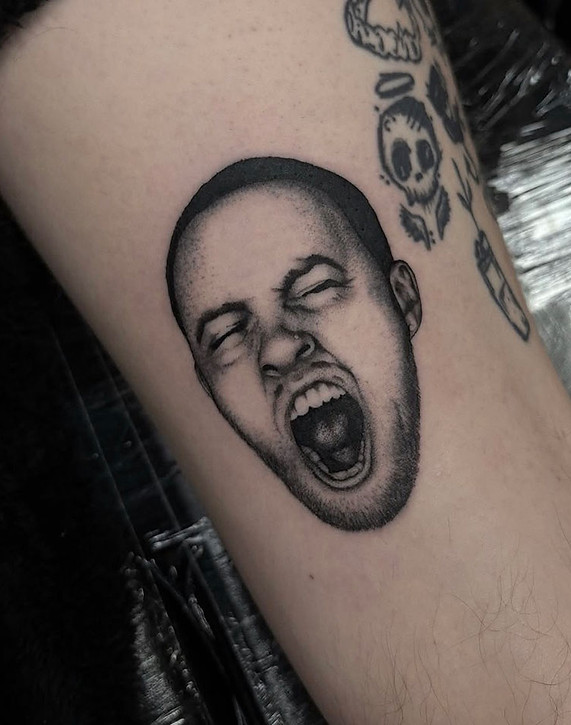
Micro realism applies the techniques of realistic tattooing at a much smaller scale, usually somewhere between a two pound coin and the palm of your hand. Portraits, pets, flowers, insects, objects and film stills are all common subjects. The finished piece is designed to read as a small, detailed image rather than a graphic or a symbol, which means the artist is working with very fine needle groupings and very small tonal shifts.
It can be done in colour or in black and grey. What defines it is the size of the tattoo not the colouring.
Micro Realism vs Fine Line Tattoos
These two often get confused because both use small needles and both look very intricate.
-
Fine line work is built from outlines. The image is defined by the thin lines themselves, and the design usually has open space in it.
-
Micro realism is built from shading. There may be no outline at all. The image is defined by the difference between light and dark, and that difference has to be created inside a very small area.
The practical difference is that micro realism has a fixed design, think of a photograph for instance. Whereas a fine line tattoo can be simplified if it needs to be, a realistic image cannot lose its detail without losing what makes it recognisable.
How Small is too Small?
This is the question worth asking before anything else, and the honest answer is that it depends on the subject.
A single object with a clear silhouette, such as a key, a moth or a flower head, can work at a few centimetres. A human or animal portrait needs considerably more room, because a face is only recognisable when the small features are in proportion, and those features shrink faster than the tattoo does. A portrait squeezed into a small space becomes a generic face rather than a specific one.
We can talk you through sizing and placement so we've got everything perfect at your consultation. That way we can also look at placement, listen to your ideas and offer our expertise if you'd like.
What Suits Micro Realism?
Pets and portraits at a sensible size, single flowers, insects and beetles, small animals, eyes, hands, jewellery, watches, keys, books, instruments, food and drink, film and game references, and small architectural details. Anything with one clear subject.
Less suited: busy scenes with several focal points, wide landscapes, crowds, or anything where the detail is spread evenly across the whole image with nothing to anchor the eye.